How High to Hang Wall Art Over a Sofa (Exact Inches)
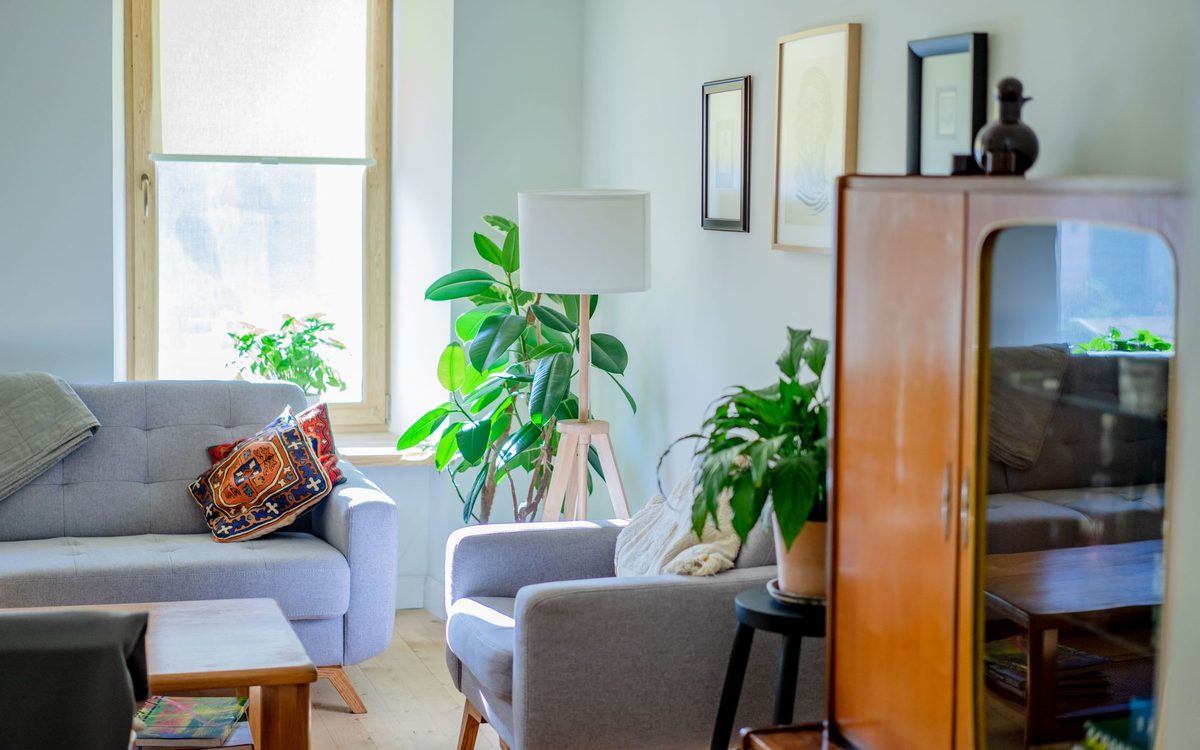
How high to hang wall art over a sofa: leave 6 to 8 inches above the back, center it about 57 inches from the floor, and size it to two-thirds of the sofa.
As an Amazon Associate, Hiewigo earns from qualifying purchases. We never accept free products or payment for placement.
The short answer
- The gap: the bottom edge of the art sits 6 to 8 inches above the top of the sofa back.
- The center: aim for roughly 57 inches from the floor to the middle of the piece or the whole grouping.
- The width: art or a grouping should span about two-thirds of the sofa, not the whole wall.
- Tall ceilings or low sofas: the gap rule wins over the 57-inch rule, so raise the art a little rather than float it.
The answer to how high to hang wall art over a sofa is simple: leave 6 to 8 inches between the top of the sofa back and the bottom of the frame, which usually puts the center of the art near 57 inches from the floor. If you are still choosing a piece for a wide wall, our guide to the best large wall art sets sized by wall width maps the sizes to common sofa widths.
Most “too high” art is the same mistake: it was hung to fit the wall, not the furniture. Anchor it to the sofa and the rest follows.
The three measurements that matter
Everything comes down to three numbers: the gap above the sofa, the center height, and the width of the art compared with the sofa.
| Measurement | Target | Why |
|---|---|---|
| Gap above sofa back | 6-8 in | Keeps art and sofa reading as one group |
| Center of art from floor | about 57 in | Average eye level; the standard gallery guideline |
| Art width vs. sofa | about 2/3 of sofa width | Fills the space without crowding the ends |
| Gap between pieces in a set | 2-3 in | Tight enough to look like one piece |
Of the three, the gap above the sofa is the one to protect. Art that floats 12 inches or more above the back looks disconnected, even if the center height is “correct.”
Step by step: find the hanging point
- Measure the sofa back. Note its height from the floor to the highest point of the back cushions or frame. Many sofas land somewhere in the mid-30s, but yours may differ.
- Add the gap. Add 6 to 8 inches. A gap closer to 6 suits a single large piece; closer to 8 suits a row of smaller frames or a sofa with tall, rounded cushions.
- Find the bottom edge. That total is the height of the bottom of the frame, not the nail.
- Check the center. Add half the art height to the bottom edge. If you land near 57 inches, you are set. If it is much higher, the piece is probably too tall for the wall or the sofa is unusually high.
- Locate the hanger. Measure from the top of the frame to the hanging wire when it is pulled taut, then subtract that from the target top edge. This is the number people skip, and it is why art ends up 2 inches off.
- Mark the center line. Center the art on the sofa, not necessarily on the wall, if a window or door throws the wall off balance.
Height by art size
Because the gap is fixed, taller art pushes the center higher. This is where the 57-inch figure bends. The table below is an illustrative example using a 7-inch gap; swap in your own sofa and frame sizes.
| Sofa back height | Art height | Bottom edge (7 in gap) | Center from floor |
|---|---|---|---|
| 32 in | 24 in | 39 in | 51 in |
| 34 in | 30 in | 41 in | 56 in |
| 36 in | 36 in | 43 in | 61 in |
| 38 in | 40 in | 45 in | 65 in |
Notice that a 36-inch-tall piece over an average sofa centers around 61 inches, a few inches over the 57 guideline. That is fine. The 57-inch figure is a starting point for open walls, and over furniture the gap is the stronger rule.
Match the width to the sofa
The two-thirds rule keeps the art from looking either lost or wider than the furniture. For a sofa 84 inches wide, aim for about 56 inches of art. For a loveseat near 60 inches, about 40 inches. The layouts below are illustrative examples, not fixed sizes.
| Sofa width | Art or grouping width | Example layout |
|---|---|---|
| 60 in (loveseat) | about 40 in | One 30x40 piece or two 20x30 pieces |
| 72 in | about 48 in | One 36x48 piece or three 14x20 frames |
| 84 in | about 56 in | Two 26x36 pieces with a 3 in gap |
| 96 in | about 64 in | Three 20x30 pieces with 2-3 in gaps |
| 108 in+ | about 72 in | Three 22x36 pieces, or two groupings |
Special cases: low sofas, tall ceilings and gallery walls
Low-profile sofas. With a very low sofa back, the 6 to 8 inch gap can put the art well under 57 inches. Keep the gap, and let the art center sit lower than 57 inches. Pushing it up to 57 just to follow the number leaves a gap that looks wrong.
High ceilings. With 10-foot ceilings, large vertical art or an oversized piece fills the extra space. Do not raise the art to “use” the height; instead go bigger, or add a second piece above in a stacked arrangement.
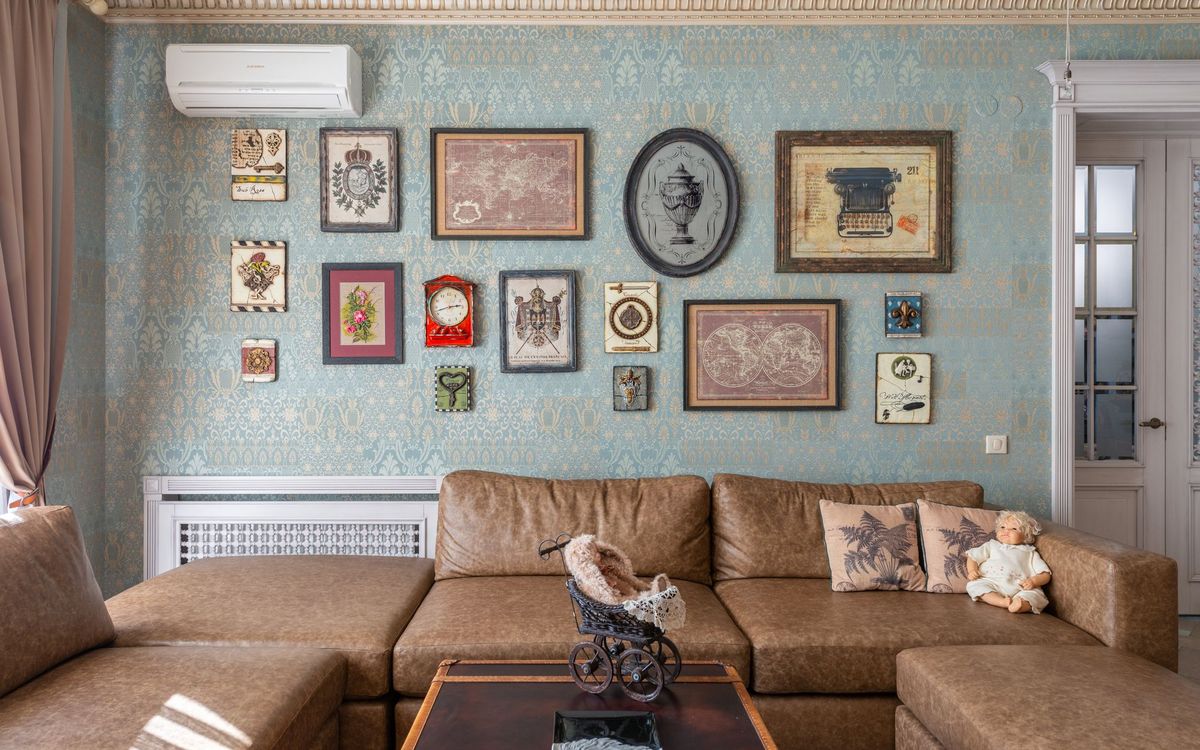
Gallery walls. Treat the whole cluster as one shape. Lay it on the floor first, then hang it so the bottom row sits 6 to 8 inches above the sofa and the middle of the whole cluster lands near 57 inches. Individual frames can vary in size, but keep spacing between them consistent, 2 to 3 inches.
Common mistakes
- Hanging at “eye level” while standing. Sofa art is viewed from a seated position, so slightly lower reads better than slightly higher.
- Art too small for the sofa. A 16x20 frame over an 84-inch sofa looks like a postage stamp. Go to two-thirds of the width or group pieces.
- Centering on the wall instead of the sofa. If the sofa is pushed off-center by a window, center on the sofa.
- Skipping a paper template. Cut kraft paper to the frame size, tape it up and live with it for a day before putting in a nail.
- Hammering first. Use painter’s tape for the bottom edge and a level, then make the hole once.
Quick checklist
- Gap above the sofa back: 6 to 8 inches
- Center of the art: roughly 57 inches from the floor, nudged to suit the sofa
- Width: about two-thirds of the sofa
- Gap between pieces: 2 to 3 inches
- Level and paper template before the first nail
Frequently asked questions
What is the 57 rule for hanging art?
It is the gallery guideline that the center of a piece, or of a whole grouping, hangs about 57 inches above the floor, close to average eye level. Over a sofa, check it against the 6 to 8 inch gap above the back. If the two disagree, favor the gap.
What is the 2/3 couch rule?
Art above a sofa should measure roughly two-thirds the width of the sofa. For an 84 inch sofa that is about 56 inches of art, whether it is one large piece or a grouped set with even spacing.
What is the recommended height for hanging art?
In open wall space the center sits around 57 inches from the floor. Above furniture, the rule shifts to a gap of 6 to 8 inches between the furniture and the bottom of the frame so the two read as one unit.
Should all pictures be hung at the same height?
In a grid or a row, yes: keep the bottoms or the centers on a single line. In a salon-style gallery wall, treat the whole cluster as one shape and center that shape at about 57 inches, letting individual frames vary.